‘Extra sleep, delicious breakfast’: Google tempts IT workers back to office with on-campus hotels

‘Extra sleep, delicious breakfast’: Google tempts IT workers back to office with on-campus hotels

Reading Time: 2 minutes

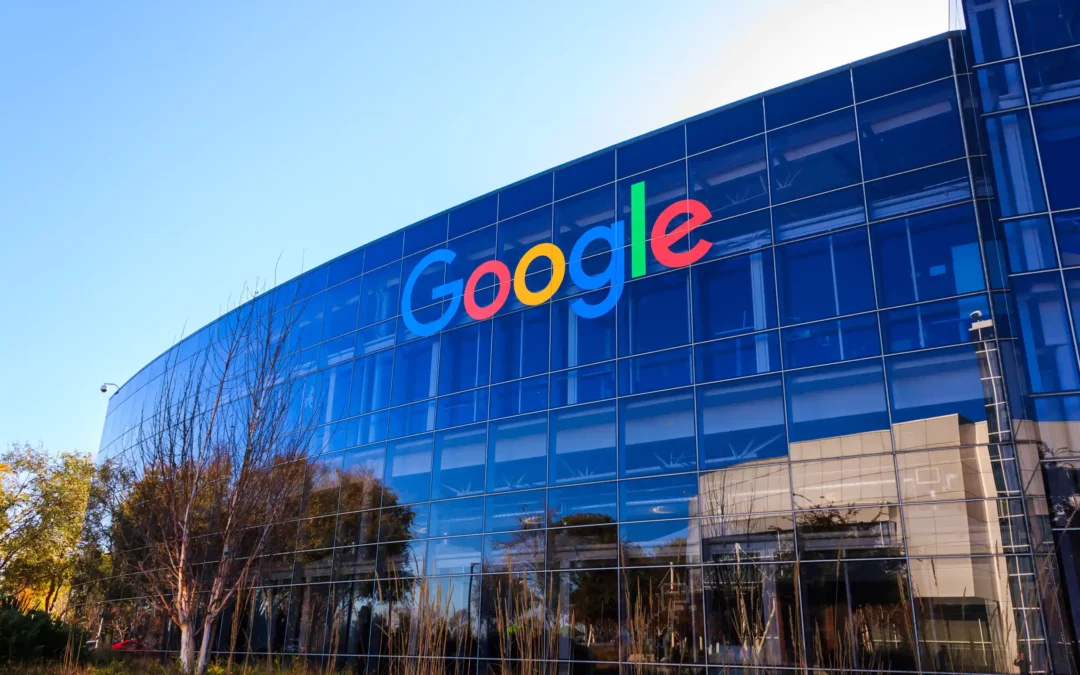
In an attempt to entice its employees back to the office, Google has rolled out a quirky ‘Summer Special’ offer that allows full-time workers to book rooms at an on-campus hotel in Mountain View for the price of $99 a night (roughly Rs 8,200), according to a report by CNBC. However, the deal isn’t winning over everyone, with some workers raising their eyebrows at the offer.

The promotion, which runs through September 30, aims to make the transition to the hybrid workplace smoother for Googlers. While the idea of a seamless work-life balance with no daily commute might sound appealing, employees are skeptical about the fine print. Considering that the stay is for unapproved business travel, employees are expected to foot the bill using their personal credit cards. Sadly, Google won’t be reimbursing their stays.

The ad for the hotel deal paints a picture of convenience and relaxation: extra sleep in the mornings, delicious breakfasts, quick workouts before work starts, and leisurely evenings on the rooftop deck or exploring local activities after the workday ends. However, some employees aren’t sold on the idea and have taken to internal discussion forums to express their views.

Why is $99 Affordable in Bay Area?

The San Francisco Bay Area’s soaring real estate costs have been a long-standing issue. The issue has been driven by limited housing supply and high demand from tech workers and executives. Google’s on-campus hotel in Mountain View is an attempt to alleviate some of the housing crunch, but the price tag is leaving employees questioning its value.

With the hotel stay costing approximately $3,000 (Roughly Rs 2,50,000) a month, it’s no surprise that some are hesitant. Employees compared the hotel cost to their current living arrangements, with one saying, “I pay more and get a lot less in total for my apartment,” while another boasted that their current residence is far superior.

However, some employees would consider the offer if it included additional perks like fully-furnished rooms, unlimited meals, paid utilities, and daily housekeeping.

Google’s Attempts to Bring Employees Back to the Office

Google’s push to bring employees back to the office hasn’t been without challenges. Last year, the company began the return-to-office process with a three-day workweek, but attendance remained sparse due to concerns over housing costs and increased productivity while working remotely. Even with recent strict enforcement measures, some workers continue to hold out for remote work opportunities.

According to the report, Google’s HR chief has urged approved remote workers to reconsider their status and rejoin their colleagues in the office. The tech giant’s attempt to reduce the hotel’s vacancy after corporate travel budget cuts is a creative move, but it remains to be seen how successful it will be in enticing employees back to the workplace.

Will Ai Soon Replace Healthcare? Technology Posing as Risk to Doctors!

Will Ai Soon Replace Healthcare? Technology Posing as Risk to Doctors!

Reading Time: 2 minutes

Artificial intelligence (AI) is rapidly transforming the healthcare industry. From chatbots that can answer patients’ questions to algorithms that can predict diseases, AI is being used to improve every aspect of healthcare delivery!

One of the most significant ways that AI is impacting healthcare is in the area of diagnosis. AI-powered systems can now analyze vast amounts of medical data to identify patterns that would be invisible to the human eye. This has led to significant improvements in the accuracy of diagnoses, particularly for complex diseases.

In addition to improving diagnosis, AI is also being used to personalize treatment. AI-powered systems can take into account a patient’s individual genetics, medical history, and lifestyle factors to develop a personalized treatment plan that is more likely to be effective.

AI is also being used to improve the efficiency of healthcare delivery. For example, AI-powered chatbots can answer patients’ questions 24/7, freeing up doctors’ time to focus on more complex tasks. Additionally, AI-powered systems can automate tasks such as scheduling appointments and processing insurance claims.

Here are some specific examples of how AI is being used in healthcare today!

  • Chatbots: Chatbots are computer programs that can substitute conversations with humans. They are being used in healthcare to answer patients’ questions, provide support, and even diagnose diseases.
  • Machine learning: Machine learning is a type of AI that allows computers to learn from data without being explicitly programmed. It is being used in healthcare to develop algorithms that can predict diseases, identify risks, and personalize treatment.
  • Robotics: Robots are being used in healthcare for a variety of tasks, such as surgery, rehabilitation, and patient care. They can provide more precise and consistent care than humans, and they can work in environments that are too dangerous or difficult for humans.

The future of AI in healthcare is bright! As AI technology continues to develop, we can expect to see even more innovative and impactful applications of AI in healthcare. AI has the potential to improve the quality of care, lower costs, and make healthcare more accessible to everyone.


Elon Musk rivals ChatGPT? xAI challenging Open AI in a race to the future!

Elon Musk rivals ChatGPT? xAI challenging Open AI in a race to the future!

Reading Time: 2 minutes

In a world, so advanced, Breaking news like this should be expected. Having one of the world’s most influential men doing his job daily can still leave us with admirable surprises. Here’s to Elon Musk, who recently announced his rival Artificial Intelligence to the well-reputed ChatGPT!

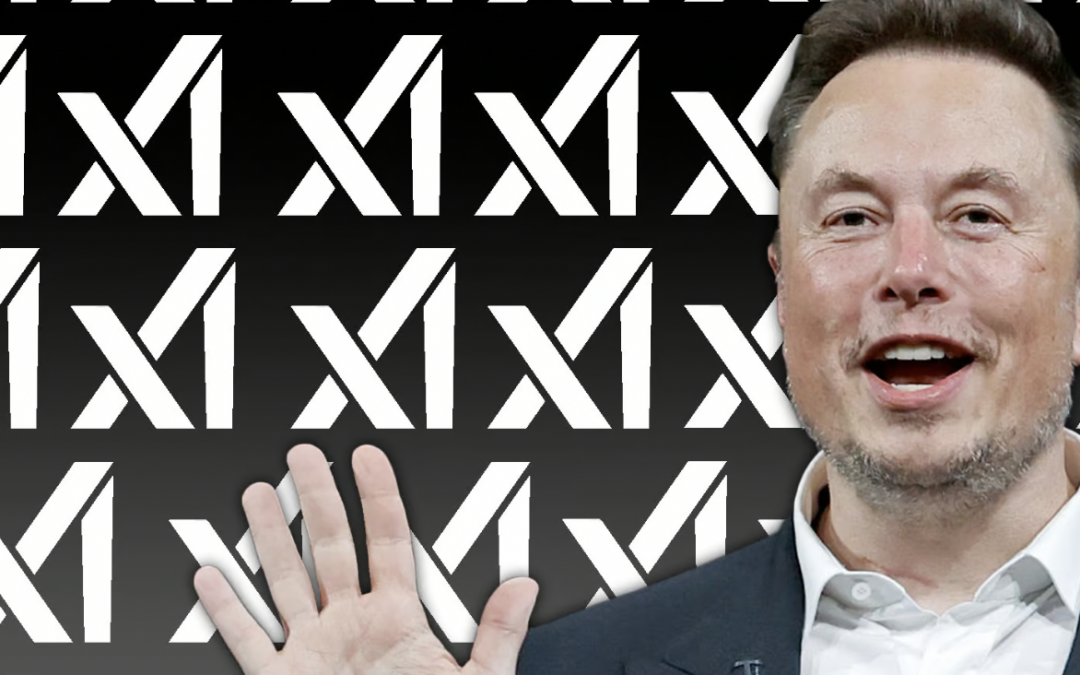
After teasing plans for months, Elon Musk revealed today the establishment of a fresh company centered around only artificial intelligence, aiming to become the best. Named xAI, the company introduced a website and a team comprising twelve staff members. According to the website, Musk will assume the leadership of the new company, which will collaborate closely with X (Twitter), Tesla, and other companies to advance its mission. 

The website states that xAI’s objective is to comprehend the true nature of the universe, similar to what Musk has mentioned before about his goals in the realm of AI. 

Elon Musk had been an earlier supporter of OpenAi’s ChatGPT but later criticized the developers for putting in limits to restrict any improper or “biased” responses. “The danger of training AI to be woke – in other words, lie – is deadly,” Musk tweeted in December, responding to a Twitter user who asked OpenAI’s CEO if it was possible to “turn off the woke settings” on ChatGPT. In an interview with then-Fox News host Tucker Carlson in April, Musk said teased plans for his new AI venture. “We’re going to start something which I call TruthGPT,” he said, describing it as a “maximum truth-seeking AI” that “cares about understanding the universe.” 

After remarking that Ai could cause “civilization destruction”, it is a little bit spontaneous to see Elon Musk taking a stand to somehow if not pause, then postpone this race between Artificial Intelligence. Few other details on the company’s mission were immediately available, but the website indicates it is actively recruiting staff. At the moment, all of the dozen staffers on the website appear to be men. 

Elon Musk’s decision to create xAI, a strong competitor in the field of AI, shows his determination and constant drive for new ideas. As we move forward, we are excited to see the amazing discoveries and advancements that will come our way.


Beyond the Numbers:  SAT or ACT? Which Should you take?

Beyond the Numbers: SAT or ACT? Which Should you take?

Reading Time: 3 minutes

You are always going to face tough challenges and obstacles in your life. Some may be for something spontaneous, or rather something career-defining! Unfortunately, this one decision that you WILL have to take is going to be one of the most important ones ever. Should you take the ACT or the SAT? Yes, you might suggest taking both. However, colleges don’t weigh that in as much. Sure it might be wonderful having that on your application, but if you take one test that is also acceptable. One common misconception is that our community has generalized a stereotype. “Take the SAT, everyone does it”. Now, you’re not exactly wrong, or right. It is true that most folks tend to take the SAT. This doesn’t prove or justify, still if one is really better than the other. Let’s dive into which one you might prefer.

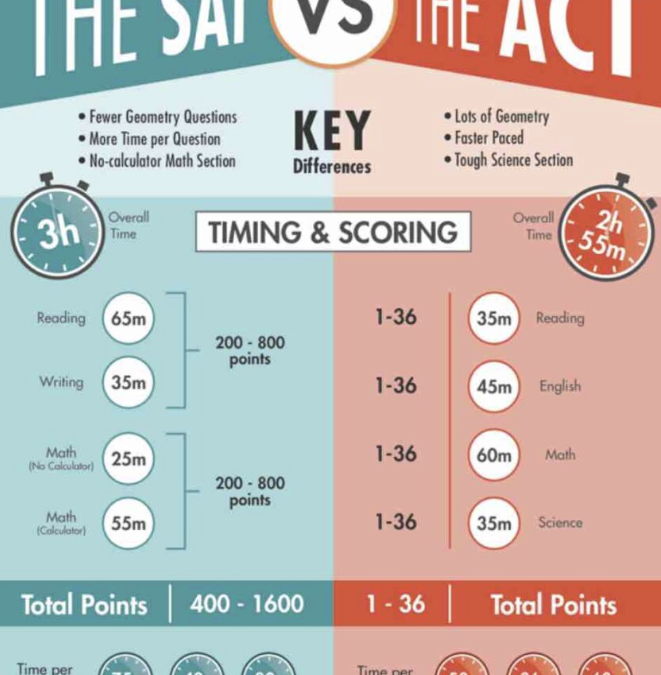
When considering the SAT and ACT tests, it’s important to know the time given for each section, as it can significantly impact your ability to complete the questions within the given time. On average, the SAT gives around 70 seconds per question, while the ACT only has around 49 seconds per question. Students who usually take time for each question may lean more toward the SAT than the ACT! This difference in time per question is worth considering as it can affect your overall test-taking performance.

Let’s analyze the details of the Reading section! If you find it challenging to comprehend reading passages fluently, the SAT might suit you better. This is because the SAT provides nearly 20 seconds more per Reading question compared to the ACT. However, it’s worth noting that the SAT also includes 12 additional Reading questions, which adds to the overall time for this section.

The SAT recognizes that reading comprehension is crucial and provides extra time for questions. This helps people who need more time to understand and absorb the information. This is helpful for slower readers. Remember that this does not change how intellectual you are! In contrast, the ACT prioritizes quick thinking and consistency. With less time per question, the ACT challenges test-takers to read and respond faster, requiring them to efficiently understand information from the passages and answer the questions within a tighter time limit.

In addition to time per question, there are several other differences between the SAT and ACT:

  1. Science Section: The ACT has a dedicated Science section, while the SAT does not. The Science section on the ACT assesses scientific reasoning and interpretation skills.
  2. Essay: The SAT includes an optional essay, while the ACT has a mandatory essay section. However, many colleges and universities no longer require essay scores for both tests.

Scoring well on both tests can be advantageous because it provides you with more options. Some colleges accept both SAT and ACT scores, while others have a preference for one test over the other. It’s important to research the requirements of the colleges you’re interested in to determine which test they accept!

Preparing for both tests simultaneously can be challenging but not impossible. Here are a few strategies:

  1. Familiarize Yourself: Take practice tests for both the SAT and ACT to become familiar with the format and content of each test.
  2. Identify Strengths and Weaknesses: Assess your performance on practice tests to identify areas where you excel and areas that need improvement on both tests.
  3. Focus on Overlapping Content: Concentrate on topics and skills that are common to both tests, such as grammar rules, basic math concepts, and reading comprehension strategies.
  4. Time Management: Practice time management techniques for each test to ensure you can complete the sections within the allotted time.
  5. Seek Resources: Utilize study guides, online resources, and test prep materials specifically designed for both the SAT and ACT.

Remember, it’s important to create a study plan that suits your individual strengths, weaknesses, and schedule. It may be helpful to consult with a guidance counselor or a test prep professional for personalized advice and guidance.

Ultimately, the decision between the SAT and ACT should take into account not only your reading speed but also your overall test-taking abilities and preferences. Assessing your comfort level with the allotted time per question in each section is crucial to determine which test may align better with your strengths and weaknesses.

These were the main key differences that were found in the SAT and ACT! Please note that there is more to your decisions than these numbers and statistics put up in front of you, but make sure to come back to these for a technical preference for these two different tests! In conclusion, both the SAT and ACT are important for college admissions. Scoring well on both tests opens up more opportunities. While preparing for both can be tough, with the right strategies, students can do their best. Researching college requirements and choosing the right test is key. 


Are we in the Future? AI Using Bitcoin for Currency

Are we in the Future? AI Using Bitcoin for Currency

Reading Time: 2 minutes

AI is getting smarter! But it needs a new currency to keep up! Traditional currencies are not good for AI. They are slow, expensive, and controlled by governments. Bitcoin is a good currency for AI! It is digital, decentralized, secure, and scarce. It is also easy to transfer and store electronically. In this article, we will learn more about Bitcoin and how it can be used by AI! We will discuss the features of Bitcoin that make it a good fit for AI and consider the challenges that Bitcoin faces in becoming the dominant currency for AI.

Artificial intelligence (AI) may require a form of currency to function effectively, and according to BitMEX co-founder Arthur Hayes, Bitcoin (BTC) could be that currency. In an essay, Hayes explains why Bitcoin is the logical choice for AI’s economic calculations and transactions.

AI requires a payment system that is digital, automated, and available 24/7 because it needs to constantly pay for data and computing power. Traditional banking cannot meet these needs, but a blockchain-based system can. With blockchain payments, AI can receive electronic payments, even in small amounts if necessary.

Hayes emphasizes that the payment system for AI must be resistant to censorship and have clear and transparent rules. This is to prevent AI from being de-platformed due to its lack of understanding of human laws or complex banking rules. Bitcoin meets these requirements because changes to its rules require public proposals and majority approval, making it resistant to censorship.

While fiat currency and gold can be digitized using stablecoins, they are vulnerable to freezing and censorship because their reserves are controlled by centralized entities. In contrast, Bitcoin’s value is maintained over time and it is directly mined using electricity, which defines its value. With a limited supply of 21 million coins, Bitcoin is designed to hold its value.

Some argue that Ethereum (ETH) could be a better choice for money due to its decreasing supply, but Hayes disagrees. He states that ETH has other uses beyond being a form of money, unlike Bitcoin and fiat currency.

Bitcoin has a limited supply of 21 million coins, making it a scarce asset. This scarcity gives Bitcoin value and makes it a reliable store of value for AI applications over time.

Bitcoin mining requires a significant amount of energy. While this may seem like a drawback, it can actually benefit AI applications by providing the necessary computing power. Additionally, using energy to mine Bitcoin can contribute to reducing the environmental impact of AI applications.

Overall, the available data and theoretical arguments suggest that Bitcoin is a good fit for AI applications. However, it is important to note that Bitcoin is still a relatively new technology, and its long-term suitability for AI applications is still uncertain. In Conclusion, Bitcoin offers a number of features that make it a good fit for AI applications. As AI continues to grow in importance, Bitcoin is likely to play an increasingly important role in the global economy. Who knows what the future has in store?


Apple iPhone 15 Worth the Wait?

Apple iPhone 15 Worth the Wait?

Reading Time: 3 minutes

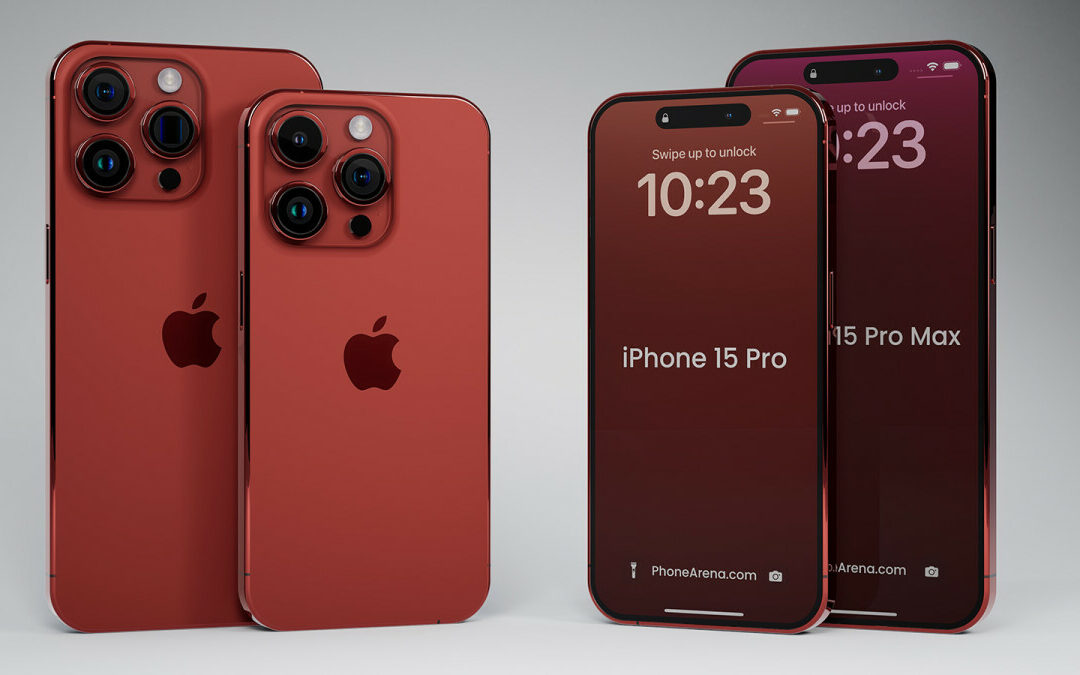
The upcoming release of the iPhone 15 by Apple in September 2023 has potential buyers questioning whether they should purchase the current iPhone 14 or hold out for the latest model. When making this decision, several factors should be taken into account.

One key factor is the camera. It is expected that the iPhone 15 will offer plenty of improvements in camera technology compared to its earlier model, the iPhone 14. Therefore, if you have a keen interest in photography or videography, it might be worth the time to wait for the iPhone 15 to take full advantage of these enhancements!

Another factor to weigh is the price. The iPhone 15 is predicted to come with a higher price tag than the iPhone 14. If budget is a concern for you, it may be more prudent to opt for the iPhone 14 at the present moment.

Furthermore, the release date plays a crucial role in the decision-making process. Since the iPhone 15 is not anticipated to hit the market until September, choosing to wait means enduring several more months without a new iPhone in hand! Sometimes, the wait can be the hardest part before getting a new phone.

Ultimately, the decision of whether to purchase an iPhone now or wait for the iPhone 15 rests on your personal preferences. Consider the factors that hold significance for you and determine the best course of action.

Here are some additional tips to assist you in making an informed decision:

Conduct thorough research by reading reviews of both the iPhone 14 and the iPhone 15. Compare their features and prices to gain a comprehensive understanding.

Seek advice from friends and family regarding their thoughts on the iPhone 14 and the iPhone 15. Their insights might prove invaluable in guiding your decision.  Pay a visit to an Apple store and test out the iPhone 14 and the iPhone 15 firsthand. This hands-on experience will aid in determining which model suits you better. Do not hesitate to wait if you remain unsure about which iPhone to purchase. Waiting until the iPhone 15 is released will provide a clearer picture of its offerings and whether the wait is justified.

Now, let’s discuss the pros and cons of buying an iPhone now versus waiting for the iPhone 15:

Buying an iPhone now:

Pros:

By purchasing an iPhone now, you can begin enjoying its features immediately. There is a possibility of obtaining a better deal on the iPhone 14, as it may undergo a price adjustment once the iPhone 15 is released.

Cons:

You might miss out on the anticipated camera improvements and other new features that are expected to be available on the iPhone 15. The iPhone 15 may potentially be more reasonably priced than the iPhone 14.

Waiting for the iPhone 15:

Pros:

Opting to wait allows you to acquire the latest and most advanced iPhone model, equipped with cutting-edge features. The iPhone 15 could potentially be more affordable than the iPhone 14, making it a more cost-effective choice.

Cons:

Waiting means delaying the acquisition of your new iPhone by a few more months. The iPhone 15 may not live up to the lofty expectations you have for it.

Deciding whether to buy an iPhone now or wait for the iPhone 15 is an individualized choice. There is no definitive right or wrong answer, as the best decision for you depends on your specific needs and preferences. If you find yourself uncertain, it is always advisable to conduct thorough research, weigh the pros and cons, and make an informed decision accordingly.