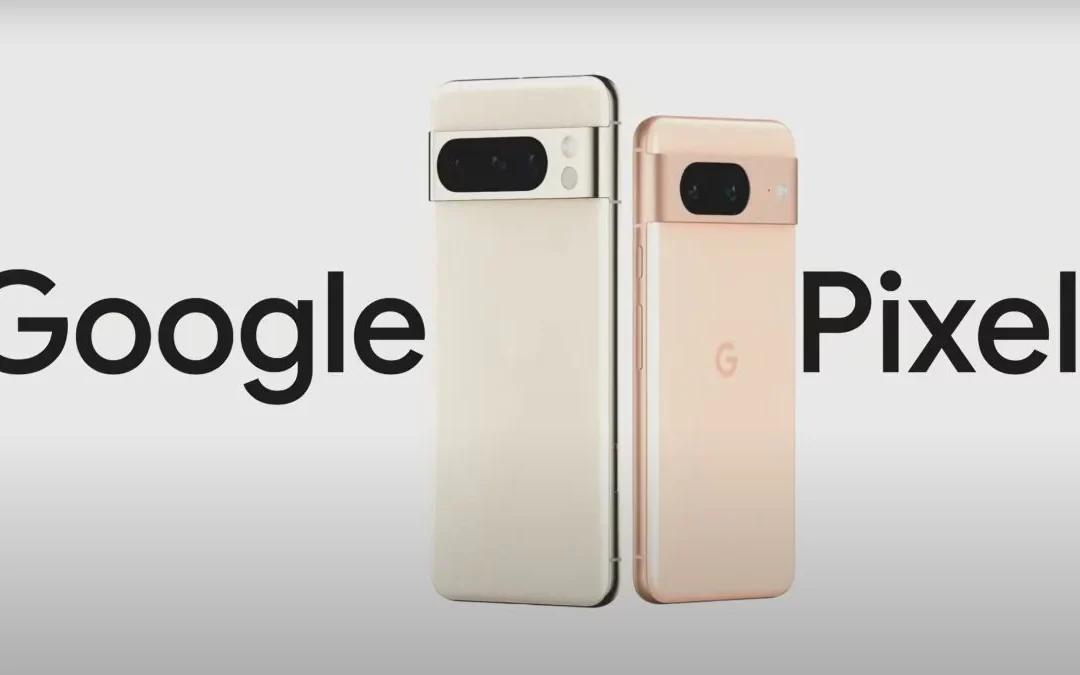
Google Pixel 8 series: Price in India compared to the US, Canada, Japan and other regions

Google Pixel 8 series: Price in India compared to the US, Canada, Japan and other regions

Reading Time: 3 minutes

Google Pixel 8 and the Pixel 8 Pro are now official. While the company has maintained a similar price tag in markets like the US, the latest Google phones have become significantly more expensive in India.

The Pixel 8 is priced at Rs 75,999, and the Pixel 8 Pro costs Rs 106,999. If you are planning to buy either of these phones, purchasing them from outside India might help you secure a better deal. However, with bank offers and additional exchange discounts, these phones will be available at a slightly lower price.

In the previous generation, the Pixel 7 and the Pixel 7 Pro were priced at Rs 59,999 and Rs 84,999, respectively. This year, their successors have seen a substantial price increase in the country. Unlike the latest Apple iPhone 15 or the Galaxy S23 series, the Google Pixel 8 series of smartphones are not manufactured in India; they are imported from China, which incurs an additional 18 per cent import duty. This could be one of the reasons for the significant price hike.

Let’s take a detailed look at the price comparison of the Google Pixel 8 series compared to the rest of the world.
                                      Google Pixel 8           Google Pixel 8 Pro
India                             Rs 75,999                      Rs 106,999
US                                    $699                                 $999
Converted to INR        58,181                               83,151
UK                                  £699                                   £999
Converted to INR      Rs 70,639                     Rs 100,956
Japan                        ¥122,900                       ¥159,900
Converted to INR       68714                               89394
Canada                      CA$949                             CA$1,349
Converted to INR        57,464                             81,685
Singapore                       SGD 1,099                  SGD 1,549
Converted to INR          66,732                              94,057

Based on the prices, the Google Pixel 8 series of smartphones are the most expensive in India compared to other parts of the world. In fact, you can buy the Pixel 8 Pro in Canada for just a little more than the price of the Pixel 8 in India.

In the UK, the Pixel 8 costs almost as much as it does in India. However, in Japan, the Pixel 8 Pro and the Pixel 8 are slightly cheaper. Currently, there is no official information on the pricing of the Pixel 8 series in markets like Dubai, Thailand, and Vietnam. Considering the prices of the previous generation Pixel smartphones, they are likely to be on the more affordable side when compared to the pricing in India.

Google’s 25th Birthday: The tech giant’s journey which started from a humble dorm room

Google’s 25th Birthday: The tech giant’s journey which started from a humble dorm room

Reading Time: 2 minutes


September 27, 2023, is big occasion in the tech world – Google’s 25th birthday. The journey of this American multinational tech company had humble beginnings and the entire journey is nothing short of remarkable.

In the mid-’90s, two bright minds, Larry Page and Sergey Brin, crossed paths as doctoral students in Stanford University’s computer science program. Little did they know that their collaboration would change the digital landscape of the world forever. They started a research project initially called “BackRub,” which eventually turned into the search engine we now know as Google.

Larry Page explored the mathematical intricacies of the World Wide Web’s link structure. He laid the foundation for a revolutionary search algorithm that made Google the search giant we know today. By 1998, their project had evolved into Google, a name inspired by ‘Googol’- a mathematical term that represents a very large number.

In August 1998, Google Inc. received its official birth certificate in the form of a $100,000 check from Andy Bechtolsheim, co-founder of Sun Microsystems. From their Stanford dorm room, Page and Brin moved to their first “office” – a rented garage in Menlo Park, California. The office had both computers and a ping pong table, which turned into their home for the next few years as they worked to realize their vision of a sorted internet.

Beyond Search

Today, Google’s impact extends far beyond its search engine. With products like YouTube, Android, Gmail, and Google Maps, Google has become an integral part of daily life for billions across the globe.

Google’s influence in the tech world spread when it became the default search engine for Yahoo in 2000. AdWords was launched in October 2000, thereby laying the foundation for Google’s online advertising dominance.

The next big development came in 2004 when Google announced that Gmail will offer a staggering 1GB of storage capacity, thereby making Gmail an integral part of our lives, and helped push back the competition from the likes of YahooMail and Microsoft’s Hotmail. The company went public in August of the same year.

Birth of Google’s Android and YouTube

Google’s innovation didn’t stop with search and email. It ventured into mobile with the acquisition of Android in 2005 and the launch of Google Talk. The acquisition of YouTube in 2006 signaled Google’s entry into the online video space.

Google’s acquisition spree continued with DoubleClick in 2007, expanding its influence in online advertising. Universal search, introduced in 2007, allowed users to access a wide range of content types in one search.

In 2008, Google unveiled its first Android phone, the T-Mobile G1, and introduced the world to the Chrome web browser. The following years saw the launch of Google Glass, the acquisition of mapping startup Waze, and the creation of Alphabet, Google’s parent company, with Sundar Pichai taking the helm as CEO of Google.

Google’s Future

Earlier this month, Sundar Pichai, Google’s CEO, shared his thoughts on the company’s future, particularly its opportunities with AI, in a blog post. Google is entering its next quarter-century where it is contending with other powerhouses in each and every product segment. AI is one of the biggest opportunities Google is trying to tap into and it is already among the top names in this field. The next 25 years could demand even more innovation and impact from Google to retain its top spot.

Until then, Happy 25th birthday, Google!


‘What’s the point of made in India?’: Apple fans complain iPhone 15 costs more in India than in US, Dubai

‘What’s the point of made in India?’: Apple fans complain iPhone 15 costs more in India than in US, Dubai

Reading Time: 2 minutes

Apple’s announcement that the ‘made in India’ iPhone 15 will still be priced higher than in the US or Dubai has left many Indian netizens disappointed. The iPhone 15 will cost Rs 79,900 in the US, while the same model will be priced at Rs 66,000 in the US and approximately Rs 77,000 in Dubai. The iPhone 15 Plus will be priced at Rs 89,900 in India, compared to Rs 74,600 in the US and Rs 85,857 in Dubai. The new iPhones will be available in India from September 22.

The netizens expressed their disappointment, questioning the purpose of having the iPhone made in India if it doesn’t result in lower prices. Some suggested that Apple does not pass on the benefits of local manufacturing, assembly, and local parts suppliers to the consumers, and instead, fixes prices based on their revenue in US dollars.

Analysts explained that several iPhone components are still imported after the payment of import duty, and the scale of business in India is much lower compared to the US or Dubai. This could be a reason behind the higher prices of the ‘made in India’ iPhone models.

However, one positive aspect is that the availability of the iPhone 15 in India will be on the same day as in the rest of the world. This was emphasizedMoS IT Rajeev Chandrasekhar, who also highlighted that the iPhone 15 will feature the NavIC GPS satellite system developedISRO.

In addition to the pricing disappointment, Apple unveiled the next generation of iPhones, which will include improved cameras, faster processors, and a new charging system. The top-of-the-line iPhone 15 Pro Max will see a price hike of $100 compared to the previous version, reaching $1,200. The basic iPhone 15 will be priced at $800, the iPhone 15 Plus at $900, and the iPhone 15 Pro at $1,000. All models will be available in stores from September 22.

One significant change introducedApple is the switch to the USB-C standard for charging, following a European regulator mandate to phase out the Lightning port cables in 2024. This transition may not be inconvenient for consumers as the USB-C standard is already widely used.

The iPhone 15 models have also undergone a redesign, featuring a shape-shifting cutout on the display screen called the “Dynamic Island” for app notifications. The premium models will be equipped with what Apple claims is the equivalent of seven camera lenses, including a periscope-style telephoto lens with a 5x optical zoom. The premium models will be encased in titanium.

Apart from the iPhones, Apple also announced its next generation of smartwatches, the Series 9 Apple Watch, with new features such as gesture control for controlling alarms and answering phone calls.

‘6G is going to deliver dividends for everybody’: India-US alliance in 6G tech lays down important foundation

‘6G is going to deliver dividends for everybody’: India-US alliance in 6G tech lays down important foundation

Reading Time: 3 minutes

India and the United States have forged a critical alliance at the G20 Summit 2023 which is aimed at propelling 6G technology into the spotlight. This collaboration marks a milestone in the journey towards the next-generation wireless network which is aimed at providing high-speed internet, better coverage and more expansive use cases. As the world eagerly anticipates the advent of 6G, Business Today TV’s Managing Editor Siddharth Zarabi spoke to prominent stakeholders in the upcoming 6G technology to understand the implications of this collaboration and its far-reaching impact on India and the world.

R Chandrashekhar, former Telecom Secretary & former President of NASSCOM, emphasized the evolving landscape of technology. He noted that the focus has shifted from mere technological advancement to the realms of trust and standards. Geopolitical dynamics have ushered in a new era where trust, or the lack thereof, plays a central role. In an increasingly digital world, the security of telecommunication infrastructure isn’t just about data; it’s a matter of national security. This infrastructure relies on a global supply chain, making it nearly impossible for any one country to be entirely self-sufficient. Hence, safeguarding telecom infrastructure is an arduous challenge. India has pursued “atmanirbharta,” while the U.S. has adopted “friendshoring.” In this context, 6G emerges as the next frontier.

He said, “Technology is advancing at an incredible pace. In recent times, the focus has shifted from technology and economics to trust and standards. The reason for this is that because of the way the geopolitics across the globe has been progressing, trust or the lack of it has become a major factor. As everything gets digitalised, the trust factor and the security of the telecommunication infrastructure not only become a matter of data security but at the end of the day become a matter of national security. It relies on electronics and products manufactured through global supply chain. And it is almost impossible for one country to be 100 per cent self-sufficient. Therefore it is extremely challenging to protect the telecom infrastructure. Consequently, what has happened is that countries like India have gone ‘atmanirbhar’, and countries like US have adopted policies like ‘friendshoring’. All of these shifts are taking place as we speak. 6G is the next generation and therefore the preparation, not just in terms of technology economics and manufacturing but also in terms of trust and supply chain become all the more important because those foundations are to be laid today.”

NG Subramaniam, Chairman of the 6G Indian Alliance Association, shared insights into the future of 6G networks. He highlighted the growing role of software over hardware in shaping these networks. Intelligence will be at the core of 6G, driven by software, artificial intelligence, machine learning, deep learning, and algorithms. Such intelligence will enhance network configurability and interoperability. Collaboration between academia, industry, startups, society, and government is vital to achieving the desired levels of flexibility and adaptability. In this regard, the alliance between Bharat 6G and the Next G alliance in the United States stands as a crucial step in the right direction.

He said, “The 6G networks will be a lot more intelligent, all enabled and defined by software more than hardware. Increasingly the network, the radios, everything is going to be more and more configurable and defined by software, which is India’s strength. Software is also going to be augmented with a lot of artificial intelligence, machine learning, deep learning, and algorithms that will make the network itself highly intelligent while the will continue to be heterogenous. It will need to be interoperating and it will become a lot more self-healing, always-on. In this context, difficulties involved in standards, and definitions need not be overemphasised. To achieve the desired level of flexibility, adaptability and interoperability open collaboration between academia, industry, start-ups, society, and the government is crucial. In that context, the alliance between Bharat 6G and Next G alliance in the United States is a great step in the right direction.”

Sanjay Kapoor, a renowned telecom expert, underlined India’s growing significance in the digital and data landscape. India has become a key player, encompassing OTT (over-the-top) players and equipment providers. Kapoor stressed the importance of interoperability and collaboration among stakeholders. The alliance with the United States is seen as a catalyst for bringing diverse stakeholders together. The ultimate goal is to establish universally accepted standards for 6G, ensuring that this technology benefits everyone, transcending borders and nationalities.

He said, “India is a quintessential part and now a large geography and now a significant player when it comes to digital and data for all stakeholders, whether OTT players, or equipment providers. Where we are today with the power we have generated, I think it will be a collaborative effort and India will have a say. I’m glad to see that India is joining hands with the US but because of the interoperability, more stakeholders will come together. Everybody will partake and eventually, there will be standards that will evolve around that everybody is good. It cannot be that one country is good or two country is good. Ultimately, 6G is going to deliver dividends for everybody.”

This Indian-American Scientist Hopes To Become 1st Woman To Jump From Earth’s From Stratosphere

This Indian-American Scientist Hopes To Become 1st Woman To Jump From Earth’s From Stratosphere

Reading Time: 2 minutes

An Indian-American scientist is hoping to become the first woman to skydive from the stratosphere at an altitude of 42.5 km above the Earth, and shatter four records. Swati Varshney is one of the three candidates selected by the Hera Project of Rising United that seeks to empower women in science and technology, the organisation has announced.

If she makes it to the skydive in 2025, Hera Project expects her to break four current records: The free fall record by 1.1 km from the highest altitude, endure the longest free fall time, break the sound barrier unaided by 264 kph, and the highest crewed balloon flight by over 1 km.

“At Rising United, we’re embarking on a historic journey, shattering records and ceilings to advance women’s equality and inspire young women’s interest in STEAM education,” the organisation said.

An Indian-American scientist is hoping to become the first woman to skydive from the stratosphere at an altitude of 42.5 km above the Earth, and shatter four records. Swati Varshney is one of the three candidates selected by the Hera Project of Rising United that seeks to empower women in science and technology, the organisation has announced.

If she makes it to the skydive in 2025, Hera Project expects her to break four current records: The free fall record by 1.1 km from the highest altitude, endure the longest free fall time, break the sound barrier unaided by 264 kph, and the highest crewed balloon flight by over 1 km.

“At Rising United, we’re embarking on a historic journey, shattering records and ceilings to advance women’s equality and inspire young women’s interest in STEAM education,” the organisation said.

The project will include educational programmes for schools to increase interest in science and technology among girls, especially from minority groups.

Varshney told Space.com that for her skydiving “is a lot more similar to my scientific training than I ever thought it would have been in the first place. It was just another avenue for me to pursue this goal of lifelong learning”.

Varshney, who has spent a decade skydiving, told the media outlet: “My academic progression and my career trajectory has been really intertwined with skydiving as it went along. So I started skydiving.”

She tried tandem jumping and found it such a “blast”, that she took it up as a hobby. “I really just wanted something that was totally different, and as a release to — this is a really cliche way to say it — cut away right from what I was doing in my day-to-day life,” she told Space.com.

“It became this never-ending journey of another pursuit of knowledge that went alongside my academic career,” she added. The stratosphere is from about 6 km to 50 km above the Earth where it gives way to the mesosphere.

WhatsApp introduces screen sharing during video calls

WhatsApp introduces screen sharing during video calls

Reading Time: 2 minutes

WhatsApp today introduced screen sharing as its latest feature to enhance the video-calling experience on its platform — taking on traditional video conferencing apps, including Microsoft Meet, Google Meet, Zoom, and Apple’s FaceTime.

The new feature, announced this morning by Meta CEO Mark Zuckerberg through a Facebook post and on his Instagram channel, will allow you to share your documents, photos, and even your shopping cart with contacts available on video calls.

First released for some beta testers on Android in late May, screen sharing on WhatsApp can be accessed by tapping or clicking the “Share” icon. Users can choose between sharing a specific app or their entire screen. This is similar to how screen sharing works on typical video-conferencing platforms like Google Meet and Zoom.

WhatsApp told TechCrunch that the screen-sharing feature has started rolling out on Android, iOS, and Windows Desktop in a phased manner. That means you may not see the feature immediately, but should soon.

Alongside screen sharing, WhatsApp launched video-calling support in Landscape mode to offer a wider and more immersive viewing experience over the existing Portrait mode. Support for the Landscape mode may also be useful when using screen sharing on the platform.

Video calling has been a part of WhatsApp for over six years, as it debuted for all users on the platform in November 2016. However, the instant messaging app is gradually improving the service to stay relevant in the competition. Just recently, WhatsApp brought picture-in-picture support for video calls to iOS. It also enabled the option to share short video messages in chats, as video, in general, has been a crucial source of communication for many users.

Screen sharing has been a crucial feature of video-conferencing apps for a while now, including those aimed at consumers. In 2021, for example, Apple enhanced its FaceTime service with SharePlay, which enabled iOS users to share their screens natively. WhatsApp has gone even further by extending this feature to users on Android, iOS, and desktop.