by Hind Himalaya Staff | May 17, 2026 | Community, Indian-American
Reading Time: 2 minutes
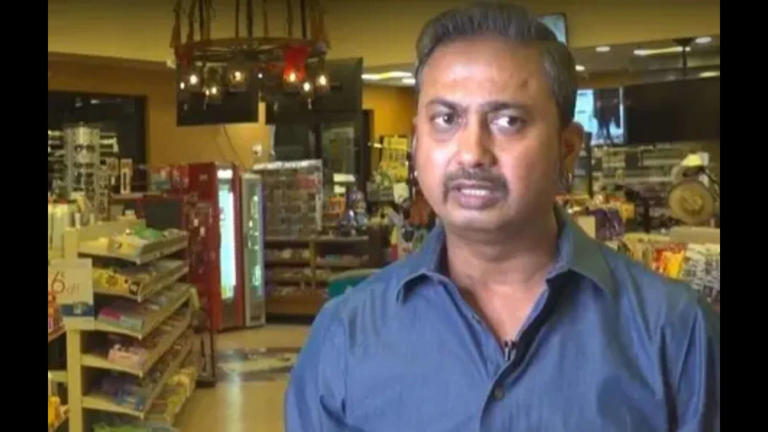
Yash Asarsa, an individual of Indian origin, made history by becoming the first Indian-origin person elected to public office in the small East Texas city of Rusk.
On May 14, 2026, Asarsa was sworn in as a member of the Rusk City Council after winning the District 3 seat unopposed in the May 2 local election. This achievement holds significance for the city of Rusk, which has a population of nearly 5,000 residents and is situated in Cherokee County, approximately 130 miles southeast of Dallas.
Originally from India, Asarsa expressed his initial fascination with Texas due to its cowboy culture and Western lifestyle. However, it was the welcoming nature of the local community that led him to establish permanent residency in Rusk. Over the course of 15 years, Asarsa became a prominent figure in the town through his business, the Truckerz gas station, where he engaged with residents from various backgrounds on a daily basis. Reflecting on his journey, Asarsa acknowledged the community’s support in shaping his life, inspiring him to give back through public service.
Asarsa emphasized the importance of listening to people’s concerns and bridging gaps within the community, drawing from his experience in retail to understand individuals from diverse backgrounds. His priorities as a council member include enhancing road infrastructure, appointing a police chief, addressing the municipal budget deficit, and revitalizing downtown Rusk.
He aims to ensure that residents feel heard and represented in decision-making processes. In light of current debates surrounding immigration and anti-Indian sentiment in certain parts of Texas, Asarsa remains optimistic about the opportunities available to diligent individuals in the United States. He views his role as a council member not only as a civic responsibility but also as a representation of his Indian heritage in the American context.
The swearing-in ceremony for Asarsa took place at Rusk City Hall, signifying a remarkable journey from immigrant entrepreneur to elected public official in the same community that embraced him years ago.
by Hind Himalaya Staff | Nov 14, 2025 | Editors Choice, Indian-American
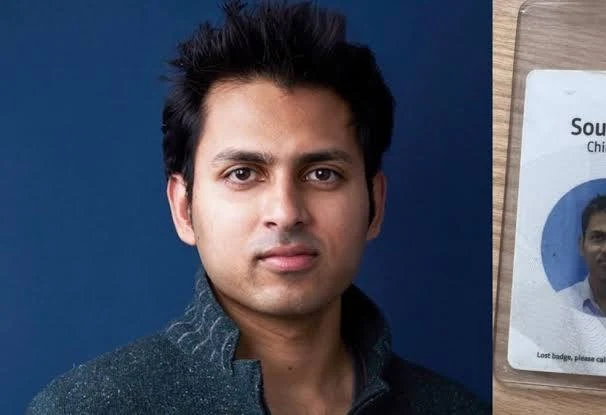
Reading Time: 2 minutesRenowned Indian-American AI researcher Soumith Chintala, known for his co-creation of PyTorch, has recently announced his departure from Meta after an illustrious 11-year tenure.
In a recent statement posted on X, Chintala expressed his desire to explore new opportunities beyond his work with PyTorch at Meta. Having started as a software engineer in 2014, Chintala ascended to the position of Vice President within the tech company led by Mark Zuckerberg. Notably, his LinkedIn profile once identified him as the key figure behind Meta’s AI initiatives. PyTorch, the open-source deep learning framework that Chintala contributed significantly to, has gained widespread recognition in the field of artificial intelligence. Chintala reflected on his time at Meta and the evolution of PyTorch, acknowledging the challenges and achievements that came with spearheading its development. The software library allows developers and researchers to construct and train AI models in a more intuitive manner compared to traditional frameworks.
Chintala’s journey from a student in Hyderabad, India, to a Vice President at Meta exemplifies his resilience and determination. Despite early academic struggles in mathematics, Chintala’s passion for technology propelled him to pursue a Bachelor of Technology in Information Technology from Vellore Institute of Technology. Following his undergraduate studies, he faced numerous obstacles in securing admission to universities in the United States, eventually landing a spot at New York University for a Master’s in Computer Science. During his time at NYU, Chintala collaborated on cutting-edge deep learning projects under the mentorship of Yann LeCun, a pivotal experience that laid the foundation for his future contributions to AI research. Chintala’s career trajectory involved roles at Amazon and MuseAmi, where he honed his skills in developing AI models for various applications. His journey culminated in a prominent position at Facebook AI Research (FAIR), now part of Meta AI, where he played a key role in advancing AI infrastructure and research initiatives.
Despite early setbacks and challenges, Chintala’s persistence and dedication ultimately led to his recognition as an exceptional talent in the field of AI. His accomplishments, including obtaining a US green card through the EB-1 category for “aliens of extraordinary ability,” underscore his unwavering commitment to overcoming obstacles and achieving success in his career.
by Hind Himalaya Staff | Jul 12, 2025 | Editors Choice, Immigration, Indian-American
Reading Time: < 1 minute
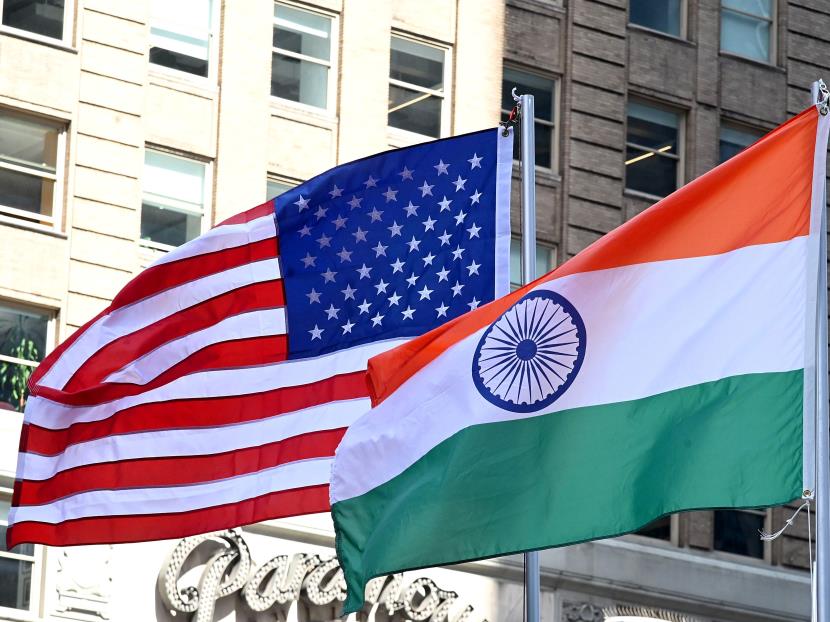
Under this bill, the cost of a US visa will increase by 2.5 times starting in 2026. Travelers visiting the country will be required to pay a non-refundable integrity fee of USD 250.
This development is expected to impact Indian students and IT professionals traveling to the US for educational and employment purposes. Furthermore, the fee may be adjusted annually based on the inflation rate. Previously, obtaining an American visa was relatively straightforward for students, IT professionals, and tourists, with minimal financial impact. However, with the implementation of the One Big Beautiful Bill, traveling to the US is poised to become a significant financial burden for travelers.
President Donald Trump signed this new law on July 4, with the intention of making America “great again.” The Visa Integrity Fee, amounting to USD 250 (approximately Rs 21,400), will be enforced starting in 2026 and will not be refundable.
It is important to note that this fee is subject to change each year based on inflation rates. The Visa Integrity Fee is part of a broader reform in travel-related fees, including a USD 24 fee on I-94, a USD 13 cost in the Visa Waiver Program, and a USD 30 EVUS tax imposed on Chinese citizens. Currently, US B-1/B-2 visa fees stand at USD 185, with a significant increase expected in 2026.
by Hind Himalaya Staff | Jul 9, 2025 | Editors Choice, Indian-American
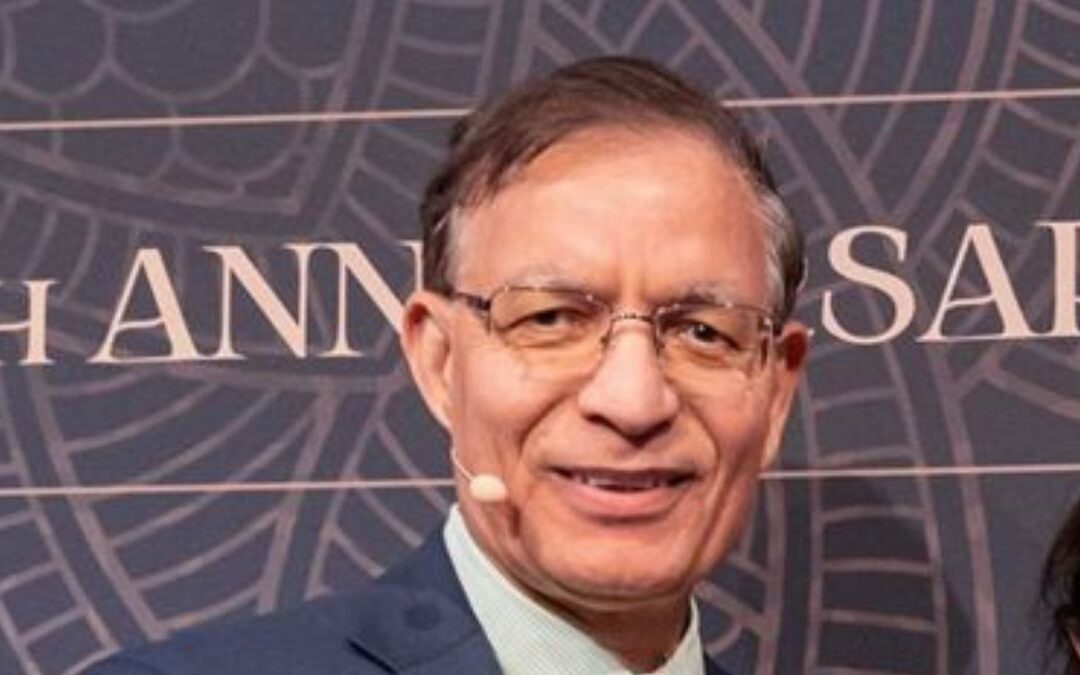
Reading Time: < 1 minuteJay Chaudhry, a distinguished alumnus of the Indian Institute of Technology BHU, founded Zscaler in 2008, a prominent cybersecurity firm that successfully went public in March 2018. His substantial net worth primarily stems from his ownership stake in the Nasdaq-listed company. With a net worth exceeding $17.9 billion, Jay Chaudhry has emerged as the wealthiest Indian-American in the United States, as reported by Forbes in its compilation of America’s Richest Immigrants 2025.
Forbes noted a notable increase in immigrant billionaires from 92 in 2022 to 125 in 2025, including notable figures such as Sundar Pichai of Google and Satya Nadella of Microsoft. These immigrant billionaires collectively hold a record $1.3 trillion in wealth, constituting 18% of America’s total billionaire wealth of $7.2 trillion. India led the list with 12 billionaires, followed by Israel, Taiwan, and China.
A graduate of the Indian Institute of Technology BHU, Jay Chaudhry moved to the United States in 1980 to pursue a master’s program in engineering and management at the University of Cincinnati. Currently residing in Reno, Nevada, Chaudhry and his family own approximately 40% of Zscaler, his successful cybersecurity venture. Prior to Zscaler, he founded and successfully sold four tech companies – SecureIT, CoreHarbor, CipherTrust, and AirDefense. Chaudhry’s entrepreneurial journey began in 1996 when he and his wife, Jyoti, embarked on their startup ventures with their savings, starting with SecureIT.
Despite humble beginnings in a village in India without basic amenities such as electricity and running water until Class 10, Jay Chaudhry has defied odds to become the wealthiest Indian-American, showcasing resilience and determination in his path to success.
by Hind Himalaya Staff | Jul 6, 2025 | Editors Choice, Indian-American
Reading Time: < 1 minute
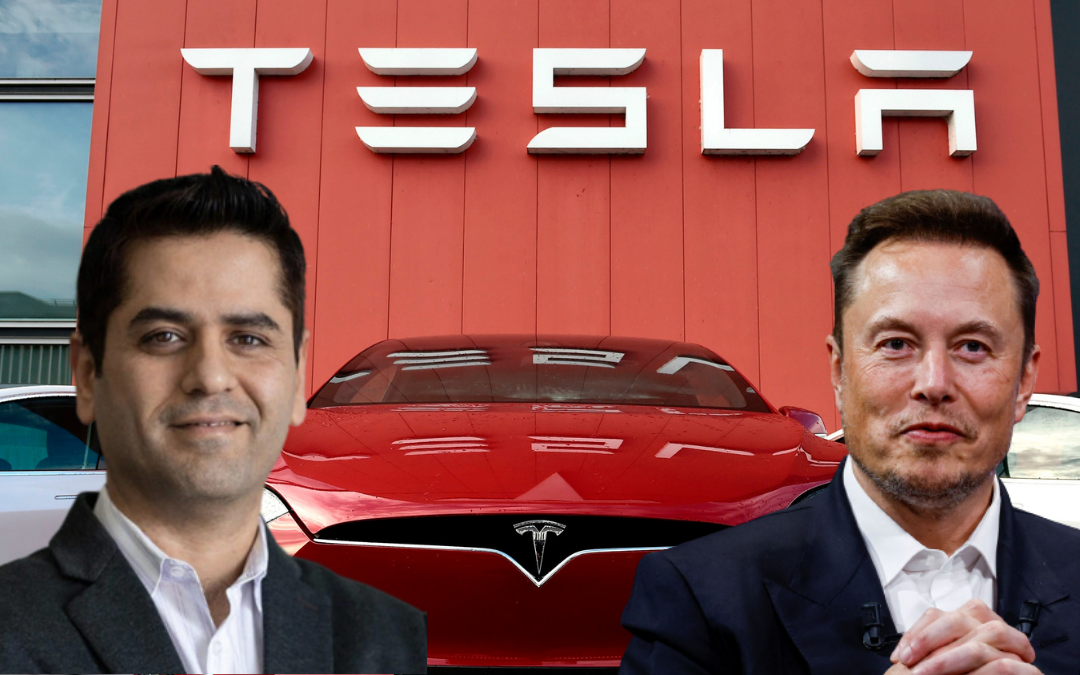
Indian-American Vaibhav Taneja, the current Chief Financial Officer (CFO) at Tesla, has been appointed as the Treasurer and Custodian of Records for Elon Musk’s recently established political venture , the America Party.
Musk announced the formation of the America Party via a post on his social media platform, X, stating its goal to “give Americans their freedom back” and challenge what he perceives as the country’s “one-party system”. Musk, who leads Tesla and SpaceX, emphasized the need to address the alleged wasteful spending and corruption within the existing political landscape.
Taneja’s official role within Musk’s political endeavor was confirmed through documentation submitted to the US Federal Election Commission (FEC), where he is listed as both Treasurer and Custodian of Records for the party. Vaibhav Taneja is a highly experienced financial executive with a background in commerce from Delhi University and a qualification as a Chartered Accountant from the Institute of Chartered Accountants of India (ICAI). Beginning his career at PricewaterhouseCoopers (PwC) in India, Taneja relocated to the United States in 1999.
In 2016, Taneja joined SolarCity Corporation, a solar energy company, before transitioning to Tesla following its acquisition of SolarCity in 2017. He assumed the role of Corporate Controller before being promoted to Chief Accounting Officer in 2019 and subsequently Chief Financial Officer in 2023.
With a wealth of experience spanning over 17 years in various sectors including technology, retail, and telecom, Taneja possesses expertise in US GAAP, SEC filings, and financial audits. He has collaborated closely with senior executives and board members to optimize operations, ensure regulatory compliance, and mitigate financial risks.
by Hind Himalaya Staff | Jul 4, 2025 | @HH Bright Zone, Editors Choice, Indian-American
Reading Time: 2 minutesIndian American Professor Prateek Prasanna Receives NSF CAREER Award for Gaze-guided Medical Image Analysis
Indian American professor Prateek Prasanna from Stony Brook University has been awarded the U.S. National Science Foundation (NSF) CAREER Award for his innovative project focusing on using eye gaze data to improve model learning in medical image analysis.
Prasanna, an assistant professor in the Department of Biomedical Informatics, aims to merge human interpretation of medical images with artificial intelligence to enhance the accuracy and interpretability of machine learning systems in radiology and digital pathology.
Prasanna’s project, titled “CAREER: Towards Gaze-guided Medical Image Analysis,” aims to bridge the gap between human expertise and AI to improve healthcare outcomes. By studying how expert clinicians visually analyze medical images, particularly through their gaze patterns, Prasanna hopes to develop AI tools that can learn and reason like human experts. Leading the Imaging Informatics for Precision Medicine (IMAGINE) Lab at Stony Brook University, Prasanna and his team focus on creating machine learning tools that integrate imaging, pathology, and genomic data to inform treatment decisions. Their work also includes research in interpretable and explainable AI, with a focus on developing computational biomarkers in challenging data environments.
In addition to his research, Prasanna is dedicated to mentoring and educating future practitioners in radiology informatics. He leads initiatives such as the SBU Radiology Informatics Microcredential Program to train individuals in the field and facilitate collaboration between engineers and clinicians.
Prasanna’s impressive background includes a PhD in Biomedical Engineering from Case Western Reserve University, an MS in Electrical and Computer Engineering from Rutgers University, and a BTech in Electrical and Electronics Engineering from the National Institute of Technology in Calicut, India.
His research has earned him recognition and innovation awards for developing companion diagnostic tools for various medical imaging applications. Overall, Prasanna’s work showcases his commitment to advancing AI in medical image interpretation and improving patient care through innovative technology solutions.
