Green Card backlog: Over 1 lakh Indians in US risk being separated from parents

Green Card backlog: Over 1 lakh Indians in US risk being separated from parents

Reading Time: 2 minutes

Over one lakh Indian children in the United States are at risk of being separated from their parents due to a backlog in the process of granting Green Cards.

More than 10.7 lakh Indians are in queue for employment-based Green Cards, which offer legal permanent residency in the United States.

Considering the huge pendency of cases and the 7 per cent cap on each country, the process is likely to take more than 135 years to be completed at the current numbers.

By the time the Green Card applications get processed, as many as 1.34 lakh Indian children, who are under the H-4 visa, will age out, a recent study by David J Bier, an immigration studies expert at the Cato Institute, stated. This will lead to forced separation from their parents.

The Cato Institute is a Washington, DC-based libertarian think tank.

Even when dropping-out factors, like death and aging out, are considered, the wait time is nothing less than 54 years.

AGING OUT LEADS TO SEPARATION FROM PARENTS
Children who move to the US from other countries stay there under the H-4 visa, which is a nonimmigrant visa for the spouses and children of H-1B visa holders. H1B visas are temporary work visas for highly skilled workers.

However, when the children turn 21, they are no longer allowed to stay in the United States under the H-4 visa category.

These children, who are sometimes referred to as “documented dreamers”, then have two options.

The first is to secure an F-1 or a student visa. This visa allows them to study in the US, but they are not allowed to work without obtaining an Employment Authorisation Document (EAD).

The EAD application process can be lengthy and expensive. There is no guarantee that these children will be able to obtain an F-1 visa, as only a limited number of children manage to get it.

The second is to self-deport to their home country. This can be a difficult and emotional decision, especially for children who came to the US as kids and have grown up there with little or no connection with their family in India.

UNCERTAINITY AMONG INDIAN FAMILIES IN US
This age limit of H-4 visas and the decades-long pendency in the Green Card process has become a major source of uncertainty and anxiety for many Indian families settled in the US.

The Biden administration has proposed a rule that would allow certain H-4 visa holders who turn 21 to remain in the United States and work, but it is unclear if and when this rule will be implemented. Biden had also promised to change the 7 per cent country cap for Green Cards
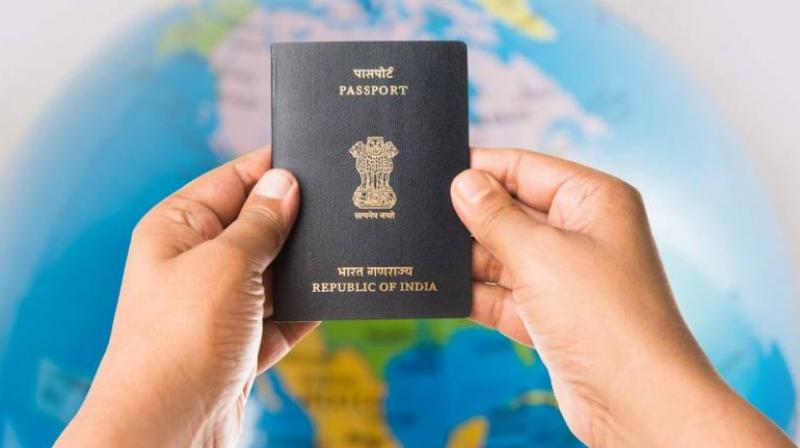
Amidst Visa Crisis, This Indian Got Special USA Visa

Amidst Visa Crisis, This Indian Got Special USA Visa

Reading Time: < 1 minute

Getting a US visa is a dream for hundreds of thousands of people in India. Every year lakhs of people apply for the US visa but a majority of them face disappointment at the rejection of their application.

But there’s a man from Navi Mumbai, who has been granted the special ‘Einstein Visa’ for a special skill. Mangesh Ghogre, who is an investment banker is an expert at creating crossword puzzles. The USA grants Employment Based Immigration (EB-1) visa, also known as the ‘Einstein Visa’ to people who display extraordinary talent in science, arts, business, education or athletics.

For Mangesh Ghogre, this talent is the ability to create the best crossword puzzles. His work has been featured in global newspapers like the New York Times, The Washington Post, The Wall Street Journal etc. He recently got featured in the New York Times for his crossword that was themed after the Taj Mahal.

More importantly, this feature was planned to be published on 15th of August celebrating India’s independence day but was published a day later due to some technicalities.This special talent of Mangesh not only brought him accolades from all around the world but also an American visa, that too, a special one.

Move In US To Recapture Unused Green Cards, Could Benefit Indian-Americans

Move In US To Recapture Unused Green Cards, Could Benefit Indian-Americans

Reading Time: 3 minutes

In a move that could benefit thousands of Indian-Americans waiting for their green cards, a member of the President’s Advisory Commission on Asian Americans, Native Hawaiian and Pacific Islanders has recommended that all unused green cards for family and employment categories since 1992 be recaptured.

This includes the recapture of more than 2,30,000 unused employment-based green cards from 1992 to 2022 and processing a portion of these every fiscal year in addition to the annual limit of 1,40,000 for this category, Indian-American Ajay Bhutoria said in his set of recommendations submitted before the commission on Thursday.

“Recapture Unused Green Cards and Prevent Future Green Card Waste” aims to address bureaucratic delays in the green card application process and provide relief to individuals waiting in backlogs, he said.

The Department of Homeland Security (DHS) is authorised by Congress to issue a specific number of family-based and employment-based immigrant visas annually. However, bureaucratic delays have resulted in the under-utilisation of available green cards, leading to accumulation of unused green cards over the years, he added.

To tackle this, Mr Bhutoria proposed two key solutions.

Firstly, the Department of Homeland Security and the Department of State should recapture unused green cards for family and employment categories from 1992 through 2025. This includes the recapture of more than 2,30,000 unused employment-based green cards from 1992 to 2022 and processing a portion of these every fiscal year in addition to the annual limit of 1,40,000 for the employment-based category, he said.

Secondly, the State Department, in collaboration with the Department of Homeland Security, should adopt a new policy to confirm that all green cards, per the annual limit, remain available for eligible immigrants even if the agencies cannot process the relevant paperwork in that fiscal year. This policy should be applied retroactively to recapture green cards that were unused before the new policy goes into effect, he said.

Mr Bhutoria noted that his recommendation emphasises the negative impact of under-utilised green cards on individuals, families and the US economy.

The unused green cards represent lost opportunities for the country and contribute to worsening backlogs, especially affecting Indian-American, Filipino-American, and Chinese-American families, according to Mr Bhutoria.

Furthermore, the lack of a green card restricts the mobility of temporary workers on H-1B visas and limits their contributions to the US economy. Children of these temporary workers are at risk of ageing out of immigration status when they turn 21, he said.

He said his recommendation aligns with proposals introduced in the 117th Congress to recapture green cards that were previously unissued by United States Citizenship and Immigration Services (USCIS) due to administrative errors.

By recapturing these unused green cards, billions of dollars could be added to the economy, the backlog for families waiting for green cards could be reduced, and unnecessary bureaucratic limitations on legal immigration could be mitigated, he argued.

According to the Congressional Research Service, over the past two decades, the number of people on the waiting list for family-sponsored green cards has grown by over 100 per cent.

As of 2020, there were approximately 4.2 million individuals waiting for family-sponsored green cards with an average wait time of six years. For employment-based green cards, there were approximately 1.2 million individuals waiting with an average wait time of six years. But for Indian IT professionals, on an average, it’s more than a decade and many are yet to receive their green card even after 15 years.

In his remarks before the commission, Mr Bhutoria applauded the Biden administration for implementing several recommendations of the commission.

In December last year, the commission recommended actions to reduce significant visa appointment wait times.

The administration has taken steps to reduce wait times and improved visa appointment processes. Visa appointment delays have been significantly reduced to two-four weeks, allowing individuals to plan their travel and immigration processes more efficiently. Additionally, students applying for a student visa can now do so up to one year prior to their college admission date, providing them with greater flexibility and ease of transition, he said.

The commission had also recommended revising ageing out kids on their parents’ green card application in December last year, he said.

The USCIS revised the Child Age-Out Calculation Policy, which calculates the age of children in certain immigration cases, providing greater clarity and fairness, ensuring that eligible children retain their eligibility for immigration benefits and do not age out of the system, he said.

“These recent immigration updates reflect the direct impact of the … Commission’s recommendations and the commitment of the Biden administration to help families and create immigration policies that are more inclusive, efficient and responsive to the needs of our communities,” Mr Bhutoria said.

A More Challenging US Citizenship Test on the Horizon

A More Challenging US Citizenship Test on the Horizon

Reading Time: 2 minutes

The path to the American dream may become more challenging as the US Citizenship and Immigration Services (USCIS) plans to update the citizenship test. According to the Washington Post, the proposed changes, which include the addition of a new English-speaking section and multiple-choice civics questions, could pose difficulties for aspiring citizens. USCIS announced in December its intention to pilot the updated speaking test and civics exam, aiming to implement the changes by 2024.

Currently, English proficiency assessment for prospective citizens occurs during the eligibility interview with an immigration officer, not the citizenship exam itself. One of the proposed modifications involves transforming the civics section into a multiple-choice format administered on a tablet, replacing the current format of providing short oral answers.

The existing test evaluates an applicant’s English speaking ability through personal questions that have already been addressed in their naturalization paperwork. In the new test, officers would display photos depicting everyday scenarios and request verbal descriptions from the applicants, as reported by the Associated Press.

During the Trump administration, the citizenship test underwent significant changes, with the number of civics questions doubled and the pool of potential questions expanded. However, these revisions were reversed by the Biden administration in 2021. Despite this, the passage rate remained consistently above 90 percent, according to the Washington Post.

The proposed changes to the citizenship test have raised concerns among immigration advocates and preparation centers. Jessica Senat, who directs English-language programs at the Immigrant Learning Center in Malden, Massachusetts, noted that it would create a learning curve. The center is one of the volunteer sites testing the revised exam this year.

Considering the lengthy waits endured by thousands of H1B aspirants for their green cards, the potential impact of these proposed changes on the path to acquiring US citizenship becomes even more intriguing.

H1B visa renewal in US: Indian-American tech executive welcomes temporary work visa rule

H1B visa renewal in US: Indian-American tech executive welcomes temporary work visa rule

Reading Time: 2 minutes

The pilot program for renewing temporary work visas in the US, that will provide relief to countless Indian workers on H-1B visas, has been welcomed by an Indian community in the country.

“I am honoured and happy to see this announcement by the White House Joint Statement and Prime Minister (Narendra) Modi himself making an announcement. The H1B restamping in the USA will bring relief to over one million people on H1B,” Ajay Bhutoria, a Silicon Valley technology executive, community leader, speaker and author, said in a statement.

“The successful implementation of in-country H1B visa stamping renewal represents a crucial step toward creating a more efficient and humane immigration system. The alleviation of financial and emotional burdens for legal immigrants and their families signifies progress in ensuring a more inclusive and welcoming society,” it said.

Bhutoria is a prominent advocate for immigration issues and in 2021, Biden had announced his intent to appoint him on the President’s Advisory Commissioner on AANHPI (Asian American, Native Hawaiian, and Pacific Islander) Commission.

During the US India Summit hosted by Bhutoria in Milpitas, California, State Department Deputy Assistant Secretary Nancy Jackson made an important announcement regarding a pilot program. This announcement further emphasised the significance and impact of the individual’s advocacy.

The Joint Statement issued during Indian Prime Minister Modi’s State Visit last month also highlighted the announcement by the State Department. The leaders, President Biden and Prime Minister Modi, welcomed the news that the State Department would initiate a pilot program to process domestic renewals of certain petition-based temporary work visas later in the year.

This pilot program would initially include Indian nationals and aimed to expand in 2024 to encompass a broader pool of H-1B and L visa holders. The program’s ultimate goal is to include other eligible categories as well.

The H-1B visa is highly sought after, as it enables US companies, particularly in the technology sector, to employ foreign workers with specialized skills and knowledge in theoretical or technical fields, often recruiting individuals from countries like India and China.

H1B visa renewal in US: Indian-American tech executive welcomes temporary work visa rule

PM Modi announces big changes in US visa rules for Indian professionals. Check details here

Reading Time: 2 minutes

Bringing good news for US visa aspirants, Prime Minister Narendra Modi on Saturday informed that two new American consulates will be opened in India – Bengaluru and Ahmedabad

Also highlighting the major changes the US government in planning to introduce to ease work visa rules, PM Modi said that Indian immigrants will no longer be required to visit their home country just for the sake renewing their HIB visa renewal.

Addressing the Indian diaspora at the Ronald Reagan Building in Washington, DC, he stated, America’s new consulates will be opened in Bengaluru and Ahmedabad. It has now been decided that the H1B visa renewal can be done in the US itself

The move is part of a people-to-people initiative and comes after a bilateral meeting between Prime Minister Modi and US President Joe Biden.

The United States authorities announced that they will introduce ‘in-country’ renewable H-1B visas as part of the people-to-people initiative to smoothen the process of H-1B visa renewal for several Indians who are working in the US on a H-1B visa.

Meanwhile, India is going to open a new consulate in Seattle this year. Apart from this, Indian Consulates will be opened in 2 more cities in America.

“Together we are not just forming policies and agreements, we are shaping lives, dreams and destinies,” said PM Modi.

This comes a day after the two countries welcomed an announcement by the US Department of State that it would launch a pilot to adjudicate domestic renewals of certain petition-based temporary work visas later this year.

“The leaders welcomed an announcement by the U.S. Department of State that it would launch a pilot to adjudicate domestic renewals of certain petition-based temporary work visas later this year, including for Indian nationals, with the intent to implement this for an expanded pool of H1B and L visa holders in 2024 and eventually broadening the program to include other eligible categories,” the India-US joint statement said.

The leaders affirmed that the movement of professional and skilled workers, students, investors and business travelers between the countries contributes immensely to enhancing bilateral economic and technological partnership.