
by Hind Himalaya Staff | Jul 12, 2025 | Editors Choice, Immigration, Indian-American
Reading Time: < 1 minute
Under this bill, the cost of a US visa will increase by 2.5 times starting in 2026. Travelers visiting the country will be required to pay a non-refundable integrity fee of USD 250.
This development is expected to impact Indian students and IT professionals traveling to the US for educational and employment purposes. Furthermore, the fee may be adjusted annually based on the inflation rate. Previously, obtaining an American visa was relatively straightforward for students, IT professionals, and tourists, with minimal financial impact. However, with the implementation of the One Big Beautiful Bill, traveling to the US is poised to become a significant financial burden for travelers.
President Donald Trump signed this new law on July 4, with the intention of making America “great again.” The Visa Integrity Fee, amounting to USD 250 (approximately Rs 21,400), will be enforced starting in 2026 and will not be refundable.
It is important to note that this fee is subject to change each year based on inflation rates. The Visa Integrity Fee is part of a broader reform in travel-related fees, including a USD 24 fee on I-94, a USD 13 cost in the Visa Waiver Program, and a USD 30 EVUS tax imposed on Chinese citizens. Currently, US B-1/B-2 visa fees stand at USD 185, with a significant increase expected in 2026.
by Hind Himalaya Staff | Jul 9, 2025 | Editors Choice, Indian-American
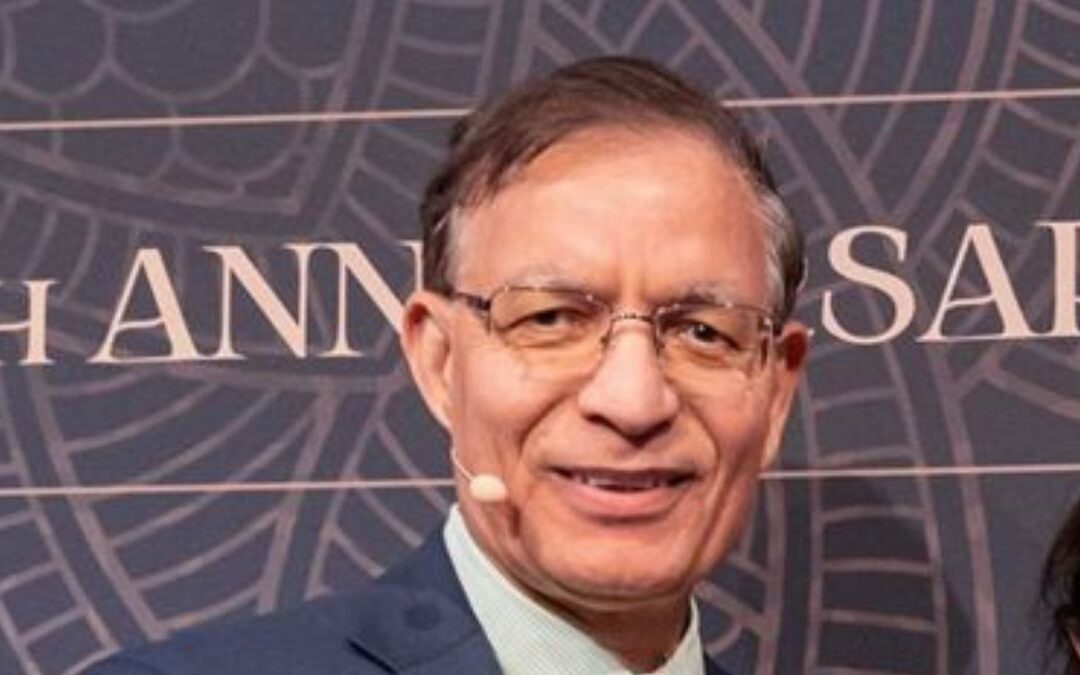
Reading Time: < 1 minuteJay Chaudhry, a distinguished alumnus of the Indian Institute of Technology BHU, founded Zscaler in 2008, a prominent cybersecurity firm that successfully went public in March 2018. His substantial net worth primarily stems from his ownership stake in the Nasdaq-listed company. With a net worth exceeding $17.9 billion, Jay Chaudhry has emerged as the wealthiest Indian-American in the United States, as reported by Forbes in its compilation of America’s Richest Immigrants 2025.
Forbes noted a notable increase in immigrant billionaires from 92 in 2022 to 125 in 2025, including notable figures such as Sundar Pichai of Google and Satya Nadella of Microsoft. These immigrant billionaires collectively hold a record $1.3 trillion in wealth, constituting 18% of America’s total billionaire wealth of $7.2 trillion. India led the list with 12 billionaires, followed by Israel, Taiwan, and China.
A graduate of the Indian Institute of Technology BHU, Jay Chaudhry moved to the United States in 1980 to pursue a master’s program in engineering and management at the University of Cincinnati. Currently residing in Reno, Nevada, Chaudhry and his family own approximately 40% of Zscaler, his successful cybersecurity venture. Prior to Zscaler, he founded and successfully sold four tech companies – SecureIT, CoreHarbor, CipherTrust, and AirDefense. Chaudhry’s entrepreneurial journey began in 1996 when he and his wife, Jyoti, embarked on their startup ventures with their savings, starting with SecureIT.
Despite humble beginnings in a village in India without basic amenities such as electricity and running water until Class 10, Jay Chaudhry has defied odds to become the wealthiest Indian-American, showcasing resilience and determination in his path to success.

by Hind Himalaya Staff | Jul 6, 2025 | Editors Choice, Indian-American
Reading Time: < 1 minute
Indian-American Vaibhav Taneja, the current Chief Financial Officer (CFO) at Tesla, has been appointed as the Treasurer and Custodian of Records for Elon Musk’s recently established political venture , the America Party.
Musk announced the formation of the America Party via a post on his social media platform, X, stating its goal to “give Americans their freedom back” and challenge what he perceives as the country’s “one-party system”. Musk, who leads Tesla and SpaceX, emphasized the need to address the alleged wasteful spending and corruption within the existing political landscape.
Taneja’s official role within Musk’s political endeavor was confirmed through documentation submitted to the US Federal Election Commission (FEC), where he is listed as both Treasurer and Custodian of Records for the party. Vaibhav Taneja is a highly experienced financial executive with a background in commerce from Delhi University and a qualification as a Chartered Accountant from the Institute of Chartered Accountants of India (ICAI). Beginning his career at PricewaterhouseCoopers (PwC) in India, Taneja relocated to the United States in 1999.
In 2016, Taneja joined SolarCity Corporation, a solar energy company, before transitioning to Tesla following its acquisition of SolarCity in 2017. He assumed the role of Corporate Controller before being promoted to Chief Accounting Officer in 2019 and subsequently Chief Financial Officer in 2023.
With a wealth of experience spanning over 17 years in various sectors including technology, retail, and telecom, Taneja possesses expertise in US GAAP, SEC filings, and financial audits. He has collaborated closely with senior executives and board members to optimize operations, ensure regulatory compliance, and mitigate financial risks.
by Hind Himalaya Staff | Jul 4, 2025 | @HH Bright Zone, Editors Choice, Indian-American
Reading Time: 2 minutesIndian American Professor Prateek Prasanna Receives NSF CAREER Award for Gaze-guided Medical Image Analysis
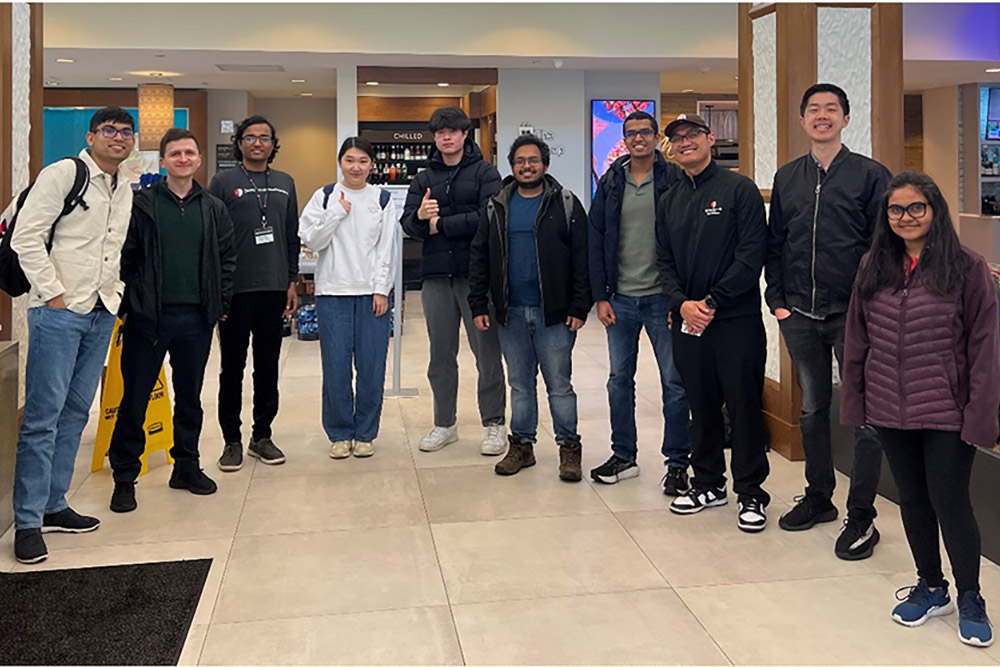
Indian American professor Prateek Prasanna from Stony Brook University has been awarded the U.S. National Science Foundation (NSF) CAREER Award for his innovative project focusing on using eye gaze data to improve model learning in medical image analysis.
Prasanna, an assistant professor in the Department of Biomedical Informatics, aims to merge human interpretation of medical images with artificial intelligence to enhance the accuracy and interpretability of machine learning systems in radiology and digital pathology.
Prasanna’s project, titled “CAREER: Towards Gaze-guided Medical Image Analysis,” aims to bridge the gap between human expertise and AI to improve healthcare outcomes. By studying how expert clinicians visually analyze medical images, particularly through their gaze patterns, Prasanna hopes to develop AI tools that can learn and reason like human experts. Leading the Imaging Informatics for Precision Medicine (IMAGINE) Lab at Stony Brook University, Prasanna and his team focus on creating machine learning tools that integrate imaging, pathology, and genomic data to inform treatment decisions. Their work also includes research in interpretable and explainable AI, with a focus on developing computational biomarkers in challenging data environments.
In addition to his research, Prasanna is dedicated to mentoring and educating future practitioners in radiology informatics. He leads initiatives such as the SBU Radiology Informatics Microcredential Program to train individuals in the field and facilitate collaboration between engineers and clinicians.
Prasanna’s impressive background includes a PhD in Biomedical Engineering from Case Western Reserve University, an MS in Electrical and Computer Engineering from Rutgers University, and a BTech in Electrical and Electronics Engineering from the National Institute of Technology in Calicut, India.
His research has earned him recognition and innovation awards for developing companion diagnostic tools for various medical imaging applications. Overall, Prasanna’s work showcases his commitment to advancing AI in medical image interpretation and improving patient care through innovative technology solutions.
by Hind Himalaya Staff | Jun 22, 2025 | Uncategorized
Reading Time: 2 minutesThe online gaming industry has witnessed an unprecedented transformation over the past decade, driven by innovative game designs, sophisticated algorithms, and shrewd player engagement strategies. Among the myriad of titles capturing players’ attention, Reactoonz has emerged as a quintessential example of how a compelling thematic concept combined with advanced game mechanics can elevate a title to international acclaim. This article explores the strategic elements underpinning Reactoonz’s success, situating it as a benchmark for industry innovation and player retention.
The Genesis of Reactoonz: Merging Theme with Mechanics
Developed by a leading gaming studio, Reactoonz was launched in 2017, instantly capturing a niche within the crowded slot market through its whimsical extraterrestrial theme. Unlike traditional fruit-machine motifs, the game introduced a dynamic grid-based layout that emphasized interconnected gameplay, featuring cascading symbols and unique power-ups.
The core of Reactoonz’s appeal lies in its innovative use of cluster pays mechanics, which incentivise players to form larger groups of matching symbols rather than relying solely on paylines. This mechanic not only increased game excitement but also contributed to higher volatility, appealing to players seeking substantial wins.
Industry Insights: Player Engagement and Retention Strategies
| Strategic Element |
Implementation in Reactoonz |
Industry Impact |
| Variable volatility |
Multiple cascade wins and cascading re-triggers |
Appealed to both casual and high-stakes players |
| Game mechanics innovation |
Quantum features triggering special wilds and multipliers |
Created deeper gameplay layers, increasing session length |
| Thematic uniqueness |
Bright, quirky alien characters with engaging animations |
Enhanced brand differentiation in a saturated market |
Moreover, Reactoonz exemplifies how integrating bonus features like ‘Gargantoon’ (a large expanding wild) and ‘Quantumeter’ (metre for additional power-ups) can boost player engagement. Industry data suggests that titles employing such layered mechanics see an average return-to-player (RTP) rate of approximately 96%, with session times increasing by 20–30% compared to traditional slots.
The Significance of Visual and Acoustic Design
Beyond mechanics, design elements play a pivotal role. Reactoonz’s vibrant palette, playful sound effects, and quirky character animations reinforce its appeal to a broad demographic, from casual players to dedicated enthusiasts. According to recent market research, up to 65% of new players cite aesthetic appeal as a critical factor influencing game choice.
Emergent Trends and the Future Outlook
As the industry shifts towards more immersive experiences incorporating augmented reality (AR) and gamification, the success story of Reactoonz highlights the importance of innovation within core gameplay frameworks. By maintaining a balance between novelty and familiarity, developers can effectively retain player interest amidst rapid technological change.
Furthermore, the game’s integration within licensed platforms and regional markets, such as Finland—where local regulations and cultural preferences shape game deployment—demonstrates the importance of contextual adaptation. For more insights into how regional factors influence game success, see Reactoonz as a case reference.
Conclusion: Lessons from Reactoonz’s Industry Impact
The case of Reactoonz underscores that successful casino game titles are those that masterfully blend innovative mechanics, captivating design, and strategic player engagement. As the industry evolves, titles like Reactoonz serve as exemplars for future development, emphasizing the importance of thematic originality paired with technological sophistication. By studying these best practices, developers can better anticipate market trends and craft games that resonate universally while maintaining regional relevance.
“Innovation in gameplay mechanics and immersive design are vital drivers of sustained success in the competitive digital gaming landscape.” — Industry Analyst, Gaming Insights 2023
